The power of Pisa
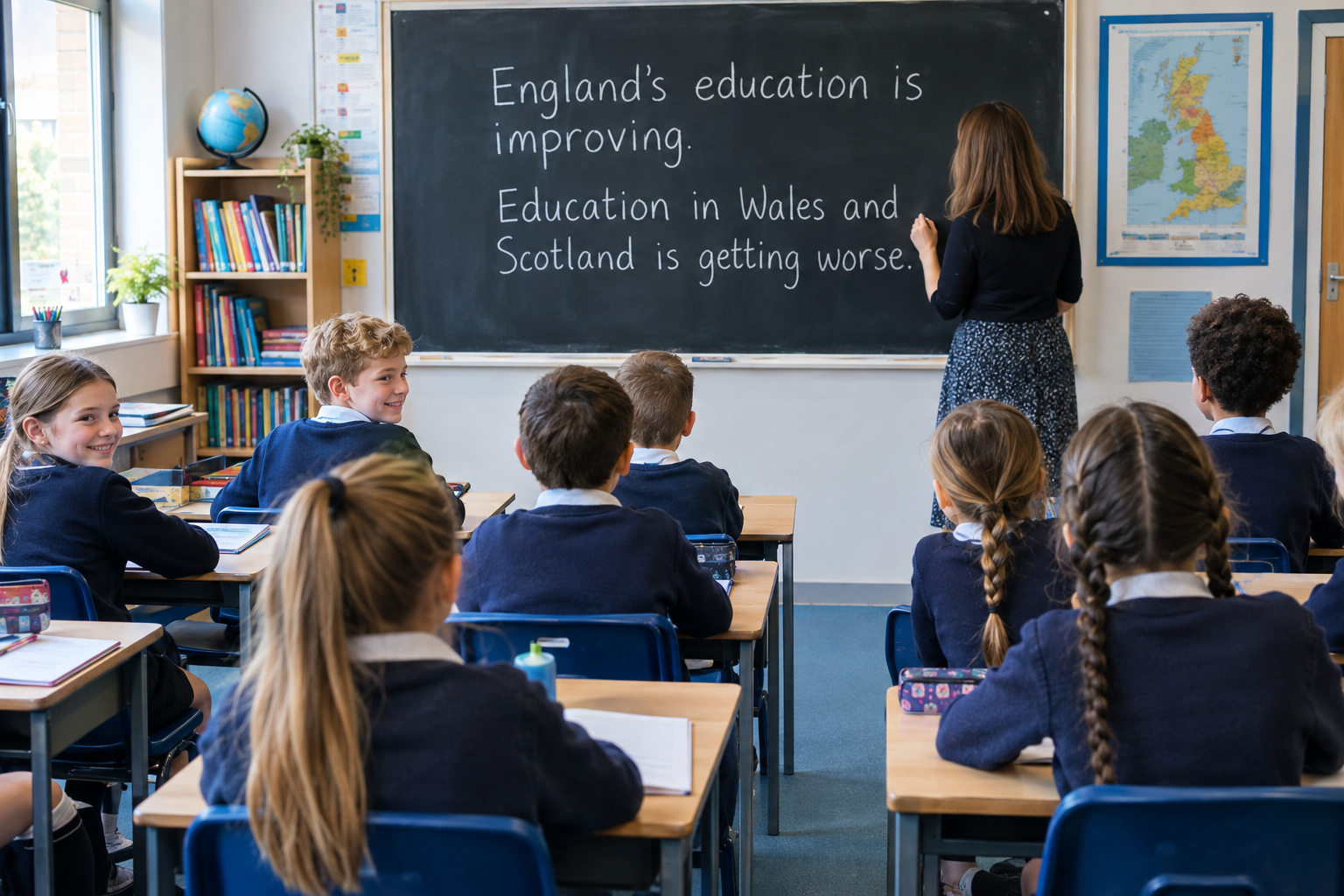 Once again, data has shown what right-thinking people have known for years.
And I have been pointing this out over and over again.
The latest PISA rankings have been published – these are the results that show how each country’s education system is doing.
In England, things are looking up, as they have been since the curriculum reforms of 2014, on which I advised.
The latest results show that pupils in England are in the top ten worldwide for the first time in reading, maths, and science.
But in Scotland and Wales – countries that didn’t follow England’s reforms and instead ploughed the progressive furrow – things have got even worse.
Astonishingly, pupils in Wales are two years behind those in England by the age of 15.
Scottish secondary pupils are more than a year behind their English counterparts in maths and science – and that is despite per-pupil funding in Scotland being 20 per cent higher than in England and Wales.
The OECD’s Programme for International Student Assessment (PISA) rankings are released every three years.
This year, they assessed 760,000 15-year-olds across the world.
The data will make worrying reading for all those who promote progressive teaching – such as the new Education Secretary Lucy Powell, who could be worse even than her predecessor Bridget Phillipson.
Powell has vowed to ‘replace the exam factory with the talent factory’ and undo changes introduced under the Conservatives by Michael Gove.
Gove told The Times: “The hard work of our teachers and students has meant that England has risen up international league tables, confirming we have the best school system in Europe.
“The truest comparisons are international comparisons, and they show that our reforms have worked and are working. So far, the rhetoric from Labour has been that they would move away from those reforms and, if they do so, they’re imperilling the future of the next generation.”
This new set of data justifies the knowledge-rich and more traditional curriculum that was introduced in 2014.
We are seeing the benefits of ensuring that children have a firmer grasp of the basics in numeracy and literacy.
I was involved in the new primary maths curriculum from 2012-14 and the changes have paid off.
It was more structured and focused on basic algorithms and on ensuring children were taught the rules of numbers, decimals, fractions, and percentages, and learnt their times tables up to 12 by the end of Year 4.
Sir Nick Gibb, who, along with Michael Gove, was one of the prime movers behind the curriculum changes, is right to be concerned about what Labour might do.
If they follow the progressive path laid by other left-wing parties in Scotland and Wales, England’s children will suffer.
They must approach the PISA data as a scientist would, rather than ignore them because they contradict left-wing ideology.
When power was handed to schools and teachers in England, results improved. When they remained centralised in Scotland and Wales, they got worse.
ends