Dumbing Down leads to Dumber Students
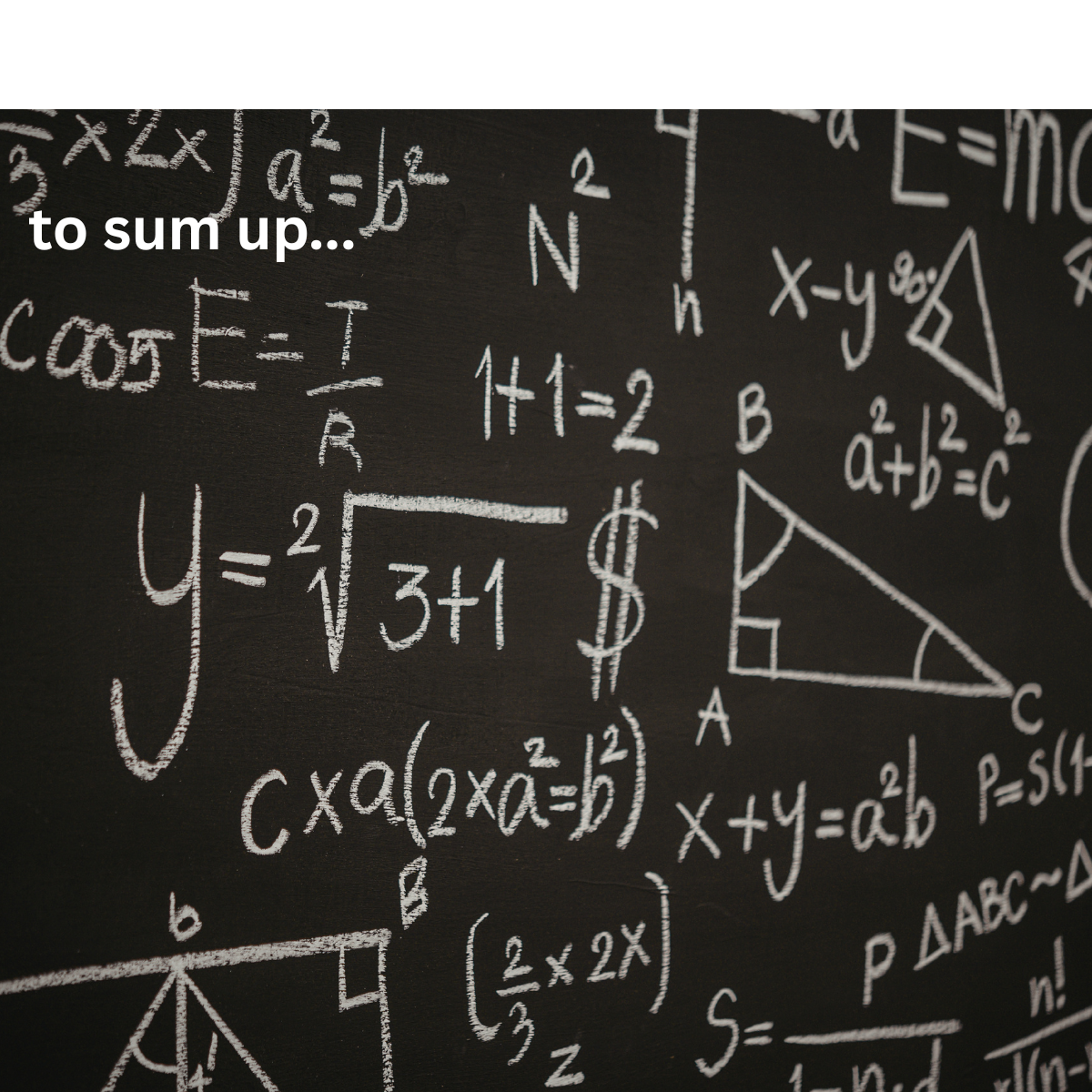
A letter recently sent by Schools Minister Georgia Gould to Ofqual confirmed that GCSE students will no longer have to memorise equations and formulae.
It’s been the case since the lockdowns, but now we know the situation has more permanence.
You might say, well what does it matter? We don’t memorise all sorts of things we used to, thanks to the advent of new technologies.
But take this to its natural conclusion, and we’ll abandon learning the times tables.
The fact is that a lot of maths involves memorising techniques and algorithms. Formulae memorisation is one part of this.
For example, you need to know how to multiply fractions; this involves memory and application. It’s the same with algebraic calculations.
It is important to know about shapes and angles – again, memory is involved.
You cannot separate memory from maths – it is a nonsense. Some youngsters find memorising things more challenging, but that is part of life.
Progressive mathematicians seem to be always trying to weaken basic knowledge in maths – as ever trying to bring everything down to the lowest common denominator.
There are a lot of things children need to know, and they must memorise them.
The dumbing down is based on a false dichotomy. Memory cannot be separated from application. They are intertwined.
Children need a certain foundational knowledge for application to take place.
It is important in maths or numeracy to have a foundational knowledge in the four rules of number, decimals and fractions, the two rules of percentages, a grasp of ratios, knowledge of probability, shapes, graphs, charts, angles and algebra, of course.
All these subject areas in maths require a grasp of factual information as well as the ability to apply it.
The same applies to English or literacy. There is a need to know things about our language as well as the ability to apply the principles that have been learnt.
Grammar, syntax, punctuation, spelling and vocabulary skills are crucial if a child is to write fluently and it is to make sense. Creativity is stinted without structural knowledge of the language.
This should not be a political issue because it all makes sense. But the letter from the Schools Minister displays the direction of travel for the political left.
They always seem to ally themselves to what they consider is progressive in education. This is a mistake and leads to worsening educational outcomes.
One only has to take one look at Scotland and Wales. They have adopted highly progressive curriculums, and they have been tumbling down the PISA (Programme for International Student Assessment) rankings by country.
Since the curriculum changes in 2014, England has risen in these rankings. This is due to a more traditional, knowledge-rich curriculum, particularly in maths and English.
The current government seems to want to throw all this away because they are ideologically to the left.
The educational truth is that we should do what is best for the children and not follow trendy progressive ideas that are often untested, and where they have been tested, have been proved to fail.
I strongly believe the crucial educational foundations in maths and English must be put down in primary school. This is because it is much harder to do this in the secondary system with 12 subjects, extensive homework and all the problems that rear their head with the onset of puberty and the challenges of growing up.
Once the foundations are in place we can be as progressive was we like – explore, challenge, analyse, think critically – the world is our oyster.
One of the parables in the New Testament is about a house built on sand and one that was built on rock – when the rains came the house on the sand fell flat. This matches the educational experience of children who don’t enter secondary education with firm foundations.
If the government keeps dumbing down what is taught in schools, then all our education will be built on foundations of sand and it will take a new administration to rebuild it again on a firm and solid knowledge base.
ends