Handwriting has benefits that typing doesn’t
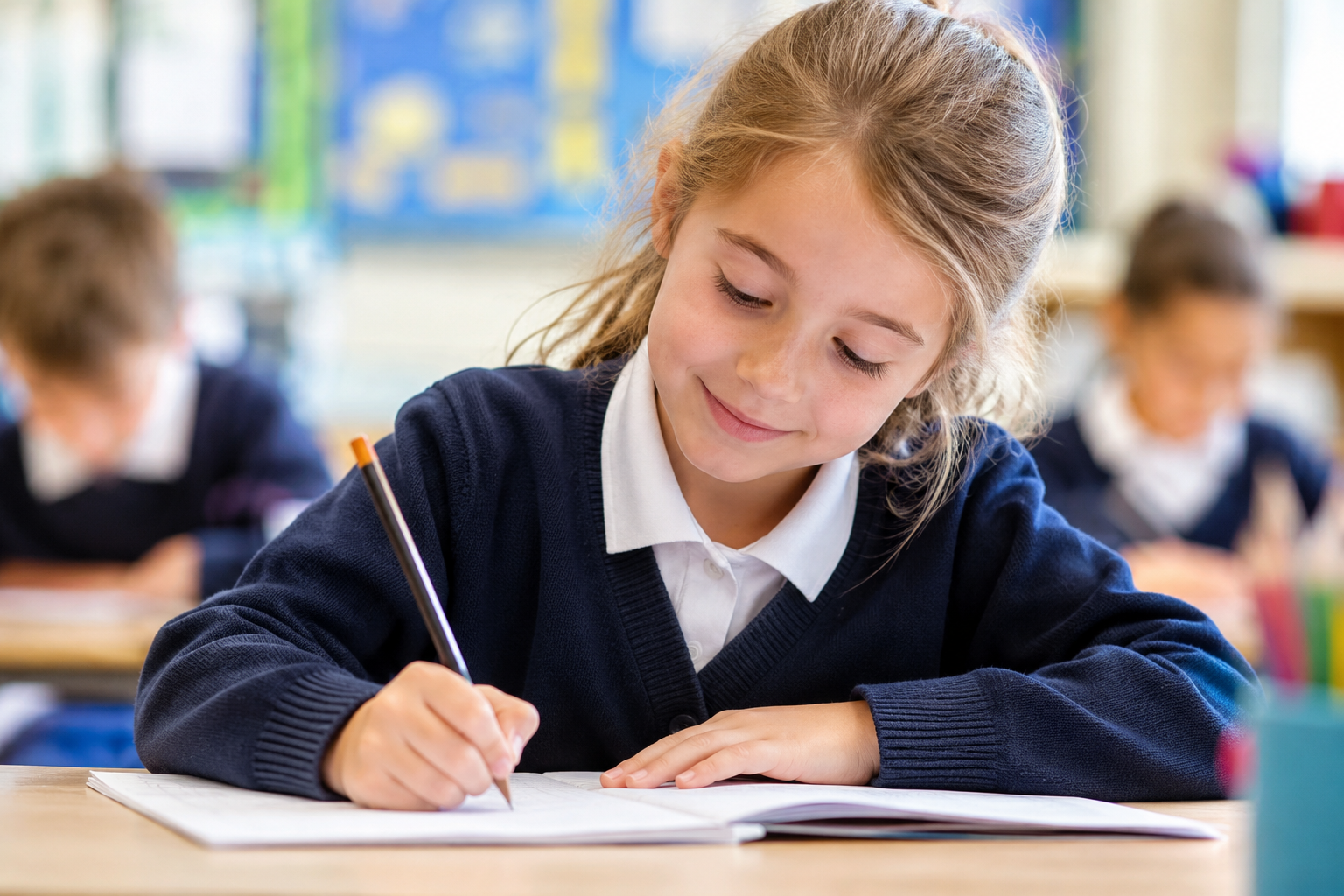 There is growing evidence of the benefits of handwriting – as opposed to using a keyboard.
A recent paper that studied the brain when students were either using a pen or keyboard, stated: When writing by hand, brain connectivity patterns were far more elaborate than when typewriting on a keyboard.
It concluded: “Handwriting requires fine motor control over the fingers, and it forces students to pay attention to what they are doing.
“Typing, on the other hand, requires mechanical and repetitive movements that trade awareness for speed.
“Our results reveal that whenever handwriting movements are included as a learning strategy, more of the brain gets stimulated, resulting in the formation of more complex neural network connectivity.”
This paper was by FR (Ruud) Van der Weel and Audrey LH Van der Meer and entitled, ‘Handwriting but not typewriting leads to widespread brain connectivity: a high-density EEG study with implications for the classroom’.
My view is that children should learn to type and also to write with a pen or pencil. Both are important.
I would suggest that at primary school, the students are taught to use a pen or pencil before they move to keyboard writing.
It seems that this new research indicates that different areas of the brain are engaged depending on whether students are handwriting or typing.
I have discovered that when children write answers rather than just tick multiple-choice boxes, they engage more critically with questions and written texts. This research appears to back this up.
This is why both are important. I am touch-typing as I write this, but I also write things down with a pen.
Maybe I’m old-fashioned, but I have resisted using an electronic diary as I find that when I write down appointments, I think about them more.
It is important to retain written skills as it involves motor skills that connect with brain activity in a different way than the digital responses.
I listen to a lot of material – including podcasts and books – but I still read because I engage with the material in a different manner.
We need to ensure children are educated in various ways, and digital responses should not replace the physical process of handwriting.
ends